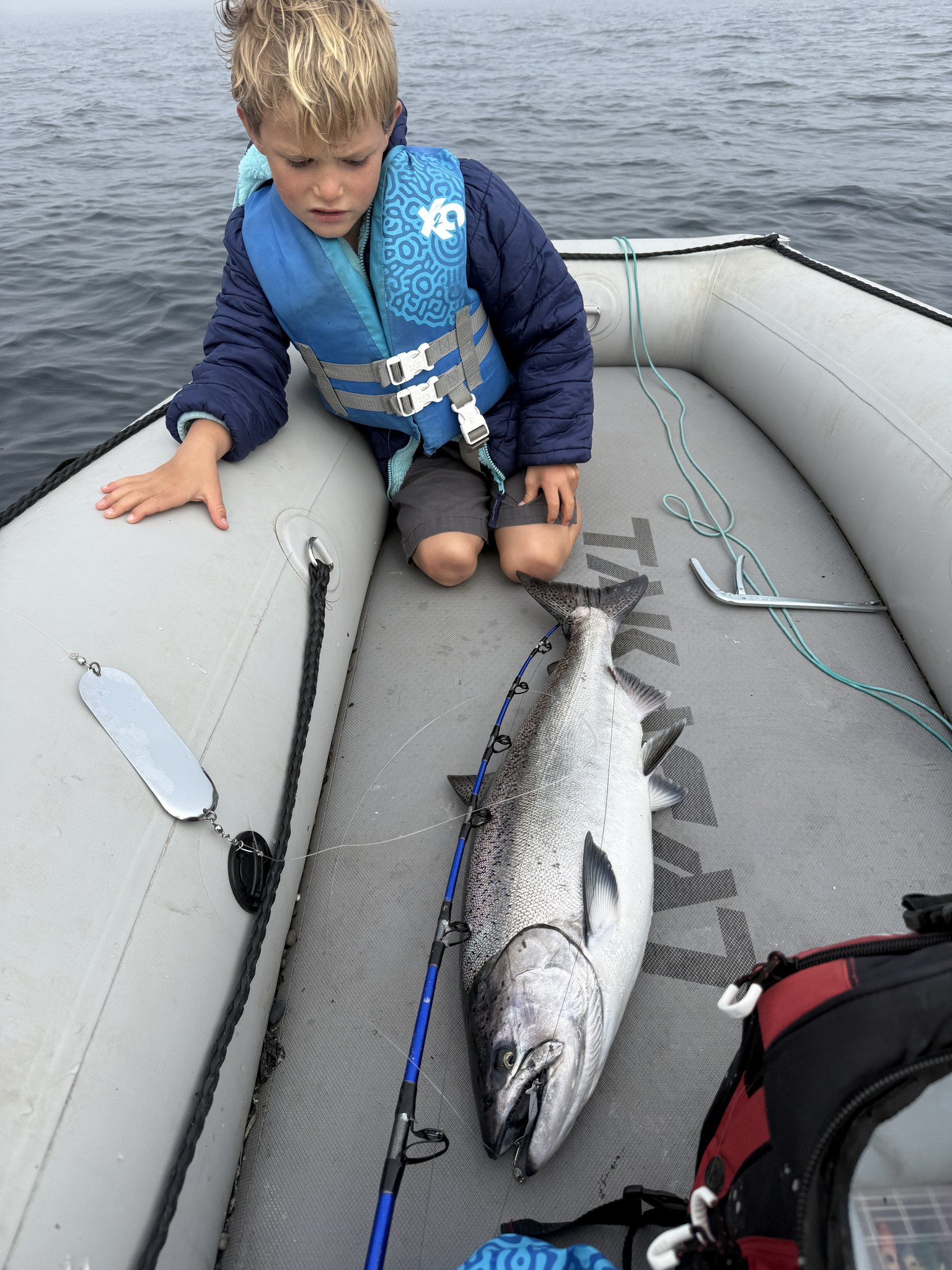
Hyrum is 8 years old. We’ve known he was autistic since just after his second birthday. Brittney sensed early autism signs and pushed for testing. Some doctors praised how perceptive she was to recognize PDA autism traits so early.
As a baby, he was calm—rarely crying, rarely fussy. But we were blindsided by sudden high fevers and occasional seizures that left us shaken.
Then came toddlerhood. He began having intense breath-holding spells, turning blue and passing out before finally exhaling. It was beyond frightening. That’s when we started questioning everything—from sensory triggers to whether conventional autism parenting styles were going to work.

The First Signs of PDA Autism and How ABA Broke Him
Brittney would remember the timeline better, but I recall that around age four or five, we began noticing signs of rigidity. Unlike Eden at that age, Hyrum wouldn’t come to the table, get in the car, or join in family activities. Trying to coax him often triggered a full meltdown—and sometimes, he’d stop breathing.
Around five, we started ABA therapy. He hated it. Just getting him through the clinic door sometimes took up to an hour. When he came home, he’d be so anxious he’d chew on his arm and be inconsolable for days. His arm became a cracked, inflamed mass—almost like a heavily calloused foot.
We switched to in-home ABA therapy. That helped a little—at least we didn’t have to fight to get him there. But Hyrum still struggled. Early on, he sang little songs like:
“Go away, scary Maddie, go away…”
Over and over to himself, like a quiet self-soothing ritual.
Maddie was his therapist at the time.
It was hilarious in a way, but also a clear reflection of his anxiety.
They rotated therapists often, trying to find a match. Only one ever made progress, but she was promoted and no longer available. Looking back, we realized she hadn’t really done “therapy”—she just played with him. And that’s what Hyrum wanted. If you played, he was calm. If you gave demands, he fell apart.
Eventually, the program owner worked with him personally. After a few weeks, she told Brittney:
“In my 20+ years, I’ve only met one other kid like him. And we couldn’t help that child either.”

We Didn’t Know It Was PDA but Nothing Helped Until We Did
That’s when we first heard the term PDA (Pathological Demand Avoidance). It’s not formally recognized in the U.S., but it is in other countries. At the time, we were still working with several state-provided specialists. Many of them were wonderful, but their consensus was the same: Hyrum didn’t respond like most autistic children.
One state specialist brought up PDA. The thing that stuck with me most was her warning: “He may stop calling you Mom or Dad.” And sure enough, within six months, he did. Hyrum began using only our first names, and the emotional distance was heartbreaking.
Brittney dove into research. She started connecting with other parents of autistic children—and realized quickly that Hyrum’s intensity wasn’t typical. Their kids might have difficult days. But Brittney’s days were different. There were no breaks. No pauses.
From the moment Hyrum wakes up to the moment he sleeps, he needs full-time supervision. He can hurt himself or others, destroy property, or create catastrophic messes in minutes. There’s no relaxing. No “timeout.” No reset button.
Brittney Broke Down Because There Was No Break
Brittney’s emotional toll was immense. Hopelessness became her daily companion. She was constantly on the edge of breakdown, and sometimes over the edge. I had to physically hold her to keep her from collapsing during meltdowns or rush home when she called frantic and barely able to breathe.
It was brutal.
By age five, Hyrum’s meltdowns became violent. Brittney was constantly bruised. Emerson, our younger son, looked beat up—covered in Band-Aids. Evenings were my turn, and I wasn’t spared. Hyrum knew exactly how to pinch and scratch with precision. Even our dog aged noticeably from the stress.

If we forgot to lock the fridge…

The Backyard Was Our Only Therapy Until That Stopped Too
The only relief was the outdoors. We had a fenced yard, and if the weather was decent, Hyrum would play. But even outside, he needed constant supervision. He’d fill up our French drains with anything he could find, hurt our animals, or destroy things. He once spray-painted all of our cars after finding a can of spray paint left out. Other times, he’d play quietly—then suddenly go make a disaster. You just never knew.
We tried to let Brittney rest inside, but she couldn’t relax knowing what might happen. ABA had been the only real break, and now that was gone.
No schools would take him. ABA-based autism schools weren’t a fit. Public schools said they were required to accept him, but warned he’d likely spend most of his time in a padded room.
So we had no choice but to homeschool him.


Homeschooling Two Neurodivergent Boys While Running on Empty
Emerson, our youngest boy, had his own struggles—crippling anxiety, likely ADD and ODD. We tried public school, but he never spoke to teachers or peers. He sat in the corner all day. After a year with no progress, we brought him home too.
Now Brittney was homeschooling two neurodivergent boys. While they could sometimes play together, they were also volatile. Fights would erupt in seconds, often ending in major meltdowns and physical danger.
Brittney journaled, prayed, studied, and tried to care for herself. But she lived in perpetual exhaustion, teetering on the edge of hopelessness. Her strength was beyond anything I’ve ever seen.
She’s a hero.
Most people never saw how hard it really was. Her love for our kids ran deeper than her own survival. To this day, I’m still in awe of her.

We Tried Everything, So We Let Go of Control
I began taking more time away from work as we prepared to sell my business. This gave Brittney some relief, even if only by separating the kids or taking one with me for a few hours.
Eventually, financial pressures forced me back to work—I started roofing with my dad. It helped us stay afloat, but Brittney was back to being alone with the boys all day.
By the end of winter, just a few months after starting roofing, she said she couldn’t survive another cold season in our home. We decided to rent a place in St. George for the following winter, hoping the change would help Hyrum. I had no idea how I’d make it work with my job, but we moved forward in faith.
The Moment We Saw That Movement Was the Medicine
As winter turned to spring, things got calmer. Hyrum could finally play outside. Then summer hit early—and hard. For the first time, he refused to go outdoors at all. He seemed more sensitive to heat than ever before, and when trapped inside, he became almost impossible to live with. That’s why winter had been so brutal. Now summer brought the same misery.
That’s when we realized: our home wasn’t working for him anymore—not in winter, not in summer. Not at all.
Work gave me a short escape—a job in northern Idaho in early fall. I was able to take the whole family.
While there, we stumbled across a study from Australia. A boy with similar autism traits had shown real progress when placed in ever-changing environments. His family backpacked across Africa for six months while researchers tracked his development.
We wondered—could the same be true for Hyrum?
During our week in that remote cabin, we saw something shift in him. A little calm. A little peace. Suddenly, the dream of settling down to raise a family didn’t feel like the right dream anymore.
Could we live on the move?
We looked into nomadic families. Life outside the U.S. was cheaper—but staying closer to extended family mattered too. An RV felt like the only flexible, affordable way forward.

Trying to Keep Going Right Now, That’s Everything
As I write this, we’re here in St. George, still figuring it out.
The change in environment has helped. Hyrum is calmer. Brittney even more so. Not having to maintain a big house while managing full-time care has been a gift.
It’s still hard. Every day takes everything we’ve got. But it’s better. Clearly better.
So we’re staying on this path—literally and figuratively. We don’t know exactly what Hyrum needs. We don’t know what’s coming next. But we’re starting to believe that constant change might not be the problem.
It might be the answer.

Yol Bolsun Means “May There Be a Road”
I came across the phrase while rereading one of my favorite Louis L’Amour books:
“Yol Bolsun”—May there be a road.
It was a common farewell in 11th- and 12th-century Turkey. Later, it became a Mongol war cry. Something about it struck me deeply.
For us, it fits.
We don’t know where we’re going.
We don’t know what will work.
We don’t have all the answers.
But we’re walking forward—together.
And so we pray:
Lord, may there be a road.


Hi, my son was just diagnosed with ASD level 3 and a rare genetic condition. We currently live in a rural area and are thinking of the best next steps for our son. Our 2 older children go to a microschool but our youngest doesn’t have access to any preschools in our area. Do you have any advice pertaining to planning or setting up pros and cons for moving areas? We live in Arizona and the summers here are brutal from April-October. Our son also loves the outdoors.
Christiana, thank you for your comment. Every one of these kids are different. But I do think these kids seem to almost all thrive when they have low stress. Outdoors seems to be healing for them. We know many families that have moved to rural areas to help there children with ASD better thrive with lower stress and more room to explore outside. I also know Arizona has some of the best resources for ASD kids. Many states have a huge backlog to get the needed Federal and state funding for your child to get the help they need. I don’t know your situation, but if homeschooling is possible that would be a blessing in most cases. Respite care is a huge bonus if the state can cover ABA or other therapies that can give you a break as well. The temp is a big factor though! Any options to head to the mountains for the summer?
Wow. What a difficult and unique situation your family has. I don’t normally post on stories, however, I want you to know how incredible you both are. Many people say they would do anything for their family; you are actually doing it. May God continue to lead you through as you care for the special children He has entrusted to your care.
Lyn, thank you for your words! Brittney is truly amazing. I just try to keep up. We do love these kids so much! Thank you again!
Oh my goodness I had no idea it was this bad ir hard for you..if you watch the science of grounding or the longer video about grounding they talk about special needs kids being runners. They will take off until they find a piece of grass along the concretely asphalted playground. I know its the grounding that he needs. I discovered how important it is for me. There’s alot of high funcruoning autistic people in our family. But I feel like I’m gonna die if I dont get my feet in the sand be around water which has ions we need. Its been amazing g how much better I’ve felt now that we’re close to the beach.
Woah. I think what youre doing is amazing.
Is there a way to donate to the cause? I’d especially like to send something for you & Brittany to get a spa day. Sounds like its not just a nice thing but a needful one. I. Not good at venmo or anything but can see what Chuck can do
He Brittney…I’m so sorry to hear about the struggles you’ve had. I kept up more w/ your mom. I had no idea what you’ve been dealing with…oh my! What a BEAUTIFUL & AWESOME MOM YOU ARE..please take time for you. Sounds easy to say when youre not drowning in the reality. Whats really helped me cuz of all the health issues ive had while trying to raise kids is not just prayer but also meditation…deep breathing..& Journaling alot was important. I realized that your child needs to ground. I feel like Im gonna die if I dont get my feet on sand ir hug a bush or something.
We just bought a house. Really close to the beach. You are ALWAYS welcomed.
I am so on awe of you..boy I just dont know how you do it all.you guts. But I see your light and know if anyone can. You can..lots of love Aunt LaLa